Across the mining sector, one truth is becoming unavoidable: extraction must now give way to restoration.
While mineral demand continues being on the agenda, public and investor scrutiny has shifted from how resources are mined to what happens after. Mine closure is no longer the end of a project’s lifecycle; it is the start of a new one: rebuilding ecosystems, landscapes, and trust.
What effective mine restoration involves today
Restoration is not a single action. It is a staged process that spans years and requires clear baselines, active management, and credible measurement.
1. Establish a clear ecological baseline
Before restoration, companies need to understand the ecological starting point: soil condition, vegetation structure, hydrology, and early biological indicators such as insect activity.
2. Stabilise the land and restore core ecosystem functions
Recontouring, erosion control, re-establishing water flows, and early revegetation are critical. These interventions create the physical structure an ecosystem needs before it can begin to regenerate.
3. Rebuild ecological communities, not just vegetation
Ecosystems depend on far more than plants: soil organisms, fungi, insects, pollinators, predators, and the full food web that connects them. Reintroducing ecological complexity is what ultimately enables stability and resilience.
4. Monitor recovery continuously
Ecosystems change daily, influenced by weather, disturbances, and land management decisions. Modern restoration requires continuous ecological monitoring.
5. Adapt and improve restoration strategies using data
Continuous biodiversity data turns rehabilitation from a compliance exercise into an adaptive management process where decisions are guided by evidence rather than assumptions.
Seeing ecosystem recovery in real time
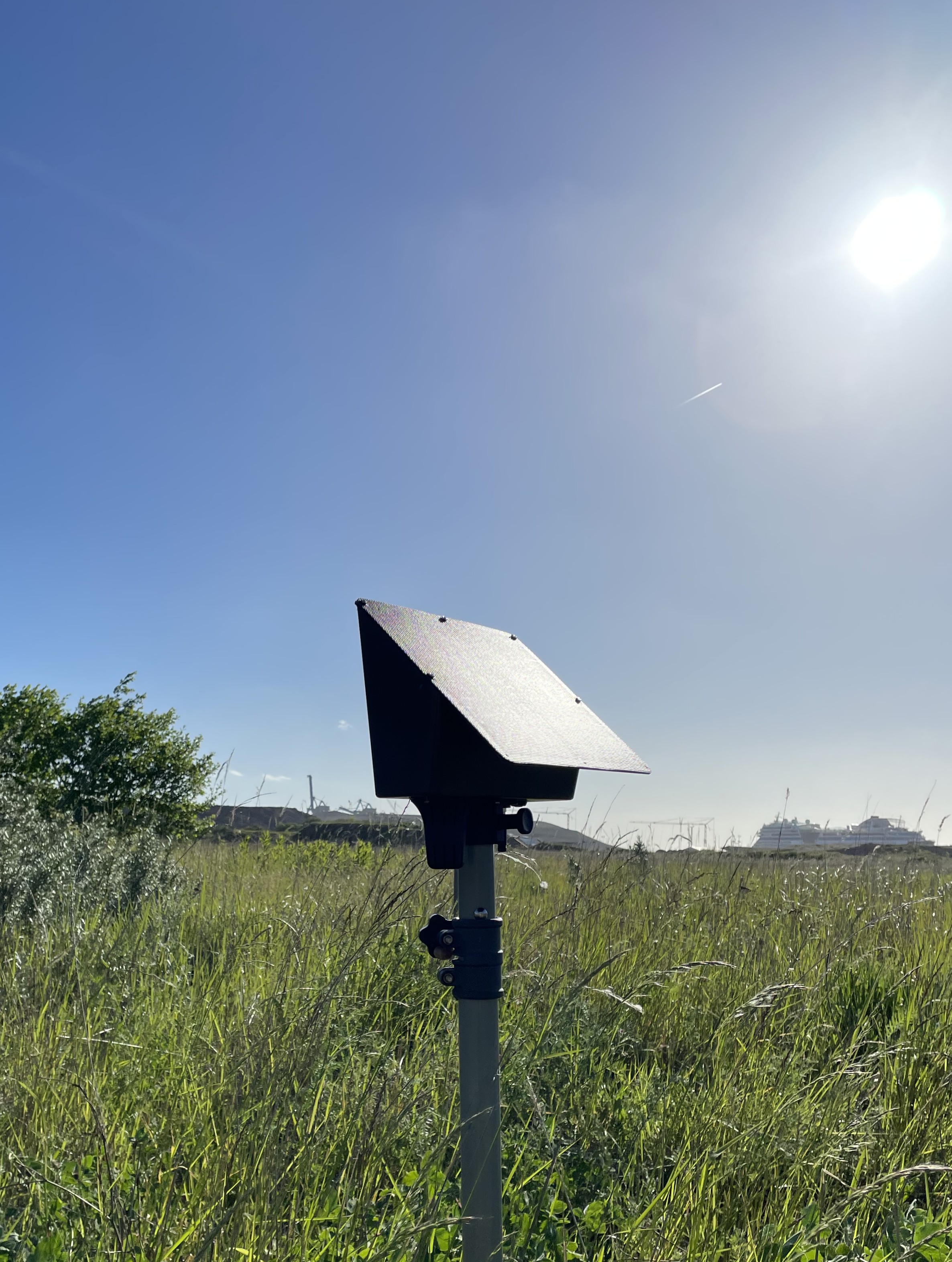
At evolito, we capture these early signals using our evo-Sense sensors and analytics platform. By measuring insect activity, abundance, biomass, and diversity continuously over time, mining companies can quantify ecological recovery in ways that are both scientifically robust and transparent.

The result is a living dataset that verifies progress, informs adaptive management, and transforms rehabilitation monitoring from static reporting to active learning.
Turning biodiversity into a management asset
For sustainability leads, biodiversity monitoring delivers more than evidence; it builds trust. It enables companies to show tangible progress toward nature positive commitments and disclose metrics that matter.
For financial teams, it helps validate long-term land stewardship, reduce closure liabilities, and unlock nature linked financing mechanisms.
Towards nature-positive mining
Every mine closure is a chance to rebuild ecosystems and reputations. By monitoring biodiversity continuously, not just at the end of the project, mining companies can demonstrate that restoration is more than an obligation. It is an opportunity to leave landscapes thriving again.
When biodiversity becomes visible, recovery becomes verifiable.