Restoration is entering a new phase. What was once driven mainly by ambition is now shaped by accountability. The Kunming-Montreal Global Biodiversity Framework sets a clear target: restore 30 percent of degraded land by 2030.
That target is reshaping markets. As carbon credits mature, a parallel nature and biodiversity credit market is emerging, and it comes with the same expectation: transparent, measurable outcomes. Biodiversity monitoring is no longer a side activity. It is becoming the evidence base on which credibility, investment, and long-term trust depend.
This is the story of how Mikro-Tek, a forest restoration company working across Chile and Canada, partnered with evolito, Wahkohtowin Development and First Nations communities to bring that evidence to one of the world’s most important and least monitored ecosystems: the boreal forest.
Key takeaways
- Mikro-Tek, Wahkohtowin Development and evolito have deployed 36 deployed (54 total) automated insect sensors across 9 restoration sites in Canada’s boreal forest.
- The project combines carbon-offset science, First Nations partnership, and continuous biodiversity monitoring.
- The project is one of 18 participants in Verra’s biodiversity pilot program, helping shape how nature credits are measured.
- Insect activity offers early, fast signals of ecosystem recovery, years before carbon data can confirm the same trends.
A Company Built on Soil and Science
Mikro-Tek’s story began in the late 1980s with a simple idea: grow stronger, healthier trees. The company started as a tree nursery, then found its edge by pairing seedlings with mycorrhizal fungi, natural soil organisms that help roots absorb more nutrients and grow faster.
These fungi connect to plant roots like an underground support system. Without them, trees planted on damaged land, such as old mine sites, often struggle to establish themselves. With them, trees grow faster, stay healthier, and store more carbon, an advantage that later made Mikro-Tek an early pioneer in carbon offset projects.
“The idea is to give the plants a boost right off the start when they’re transplanted, so they can get over the transplant shock,” explains founder and CEO Mark Kean.
Over nearly three decades of testing, the results held: stronger trees, healthier soils, more resilient young forests. But as carbon and nature markets evolved, so did the questions Mikro-Tek needed to answer.
From Chile to Canada’s Boreal
Chile became Mikro-Tek’s proving ground. Its year-round growing season let the company test faster and at scale.
“We could test the technology faster down in southern climates,” Mark says. “Over three years, we achieved an average 50 percent growth increase in seedlings.” In Canada, he notes, the same size tree might take 80 to 100 years to grow.
Working with 24 landowners, Mikro-Tek restored 7,000 hectares and registered large-scale carbon projects under the CDM and the Verified Carbon Standard (Verra), totaling 1.4 million tons of carbon in Chile.
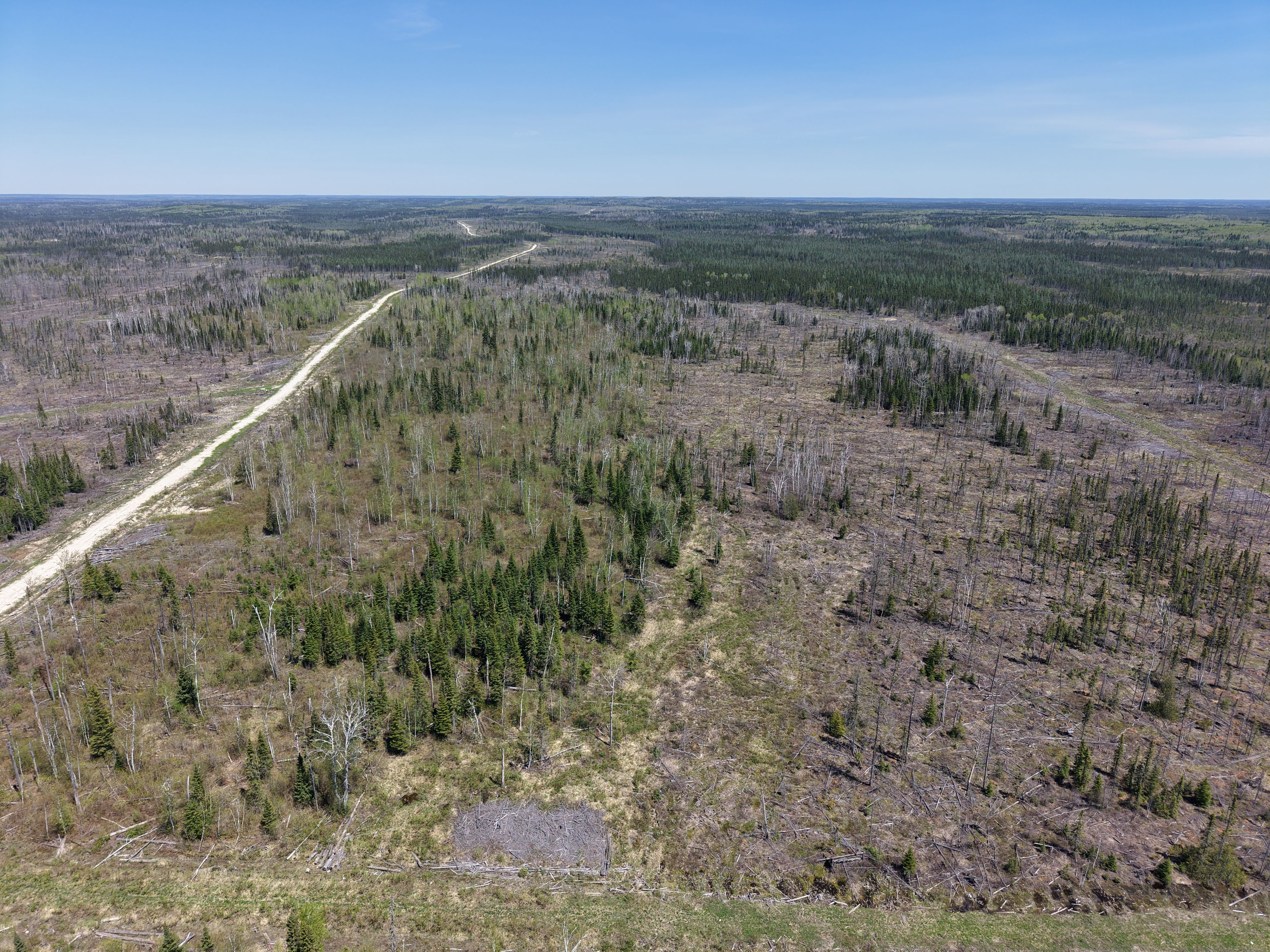
The company’s focus has now shifted decisively to Canada’s boreal forest, a colder, slower-growing landscape and home to many of the First Nations communities Mikro-Tek works alongside. Tens of millions of inoculated seedlings are already in the ground, with another 20 million on the way.
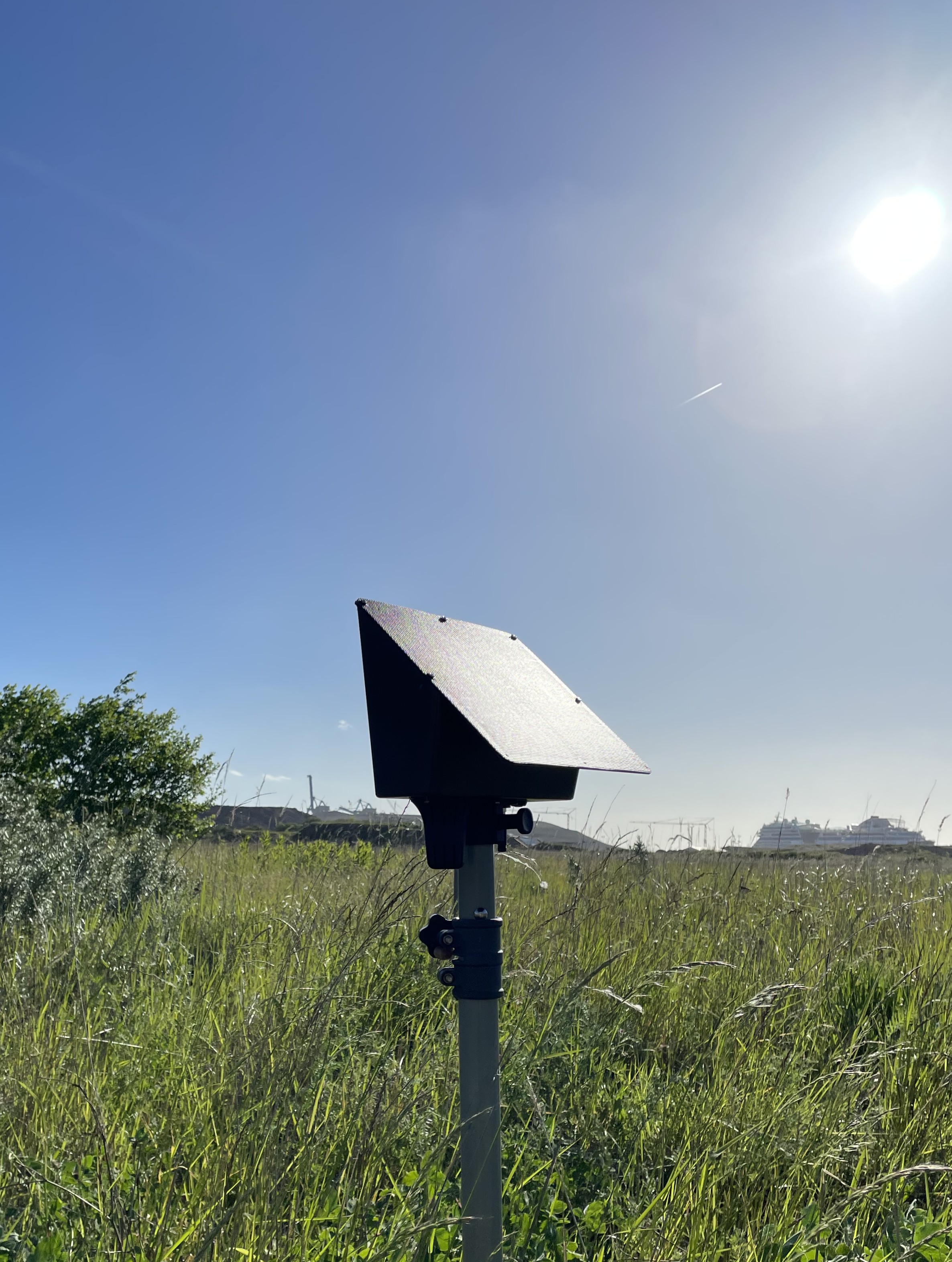
In May 2026, Mikro-Tek and evolito deployed 36 deployed evo-sense insect monitoring sensors across 9 restoration sites deep in the boreal, one of the most extensive automated insect monitoring efforts undertaken in this biome. This year’s monitoring runs through the growing season and wraps before winter. That will complete a second year of monitoring at the original site and establish the biodiversity baseline for the other 8, the foundation for continuous, landscape-level data across multiple restoration sites at once.
As the work expanded, one realization became clear: carbon alone could not capture the full ecological value of these growing forests.
“In addition to the carbon projects, there’s also more biodiversity in these planted forests: you have a faster-growing forest, and you have broadleaf and conifer seedlings growing,” Mark says.
A 360-Degree View of Biodiversity
The goal of forest restoration is to balance what’s ideal with what’s possible: cost-effective monitoring, science-based monitoring, and community-informed monitoring.
Mikro-Tek was ahead of the curve here. For years, the company measured plant diversity alone. Partnering with Wahkohtowin Development, a First Nations owned and led organization that aims to develop Indigenous-led Nature Based Solutions & conservation initiatives, advocate for the abolishment of herbicide (glyphosate) spraying on the forests and actively explores herbicide alternatives, has broadened that view considerably. Together, they now track a wider range of signals:
- Vegetation surveys to understand plant diversity
- Bird acoustic monitoring to track species presence and activity
- Small mammal cameras to capture elusive fauna
- Soil DNA sampling to reveal the microbial world beneath the surface
- Baseline data to compare biodiversity in areas sprayed and not sprayed with herbicide (Glyphosate)
Alongside these tools sits something no sensor can replicate: First Nations land knowledge, built over generations of relationship with these ecosystems, brought into the restoration approach through the Wahkohtowin Development partnership.
Why Insect Monitoring Completes the Picture
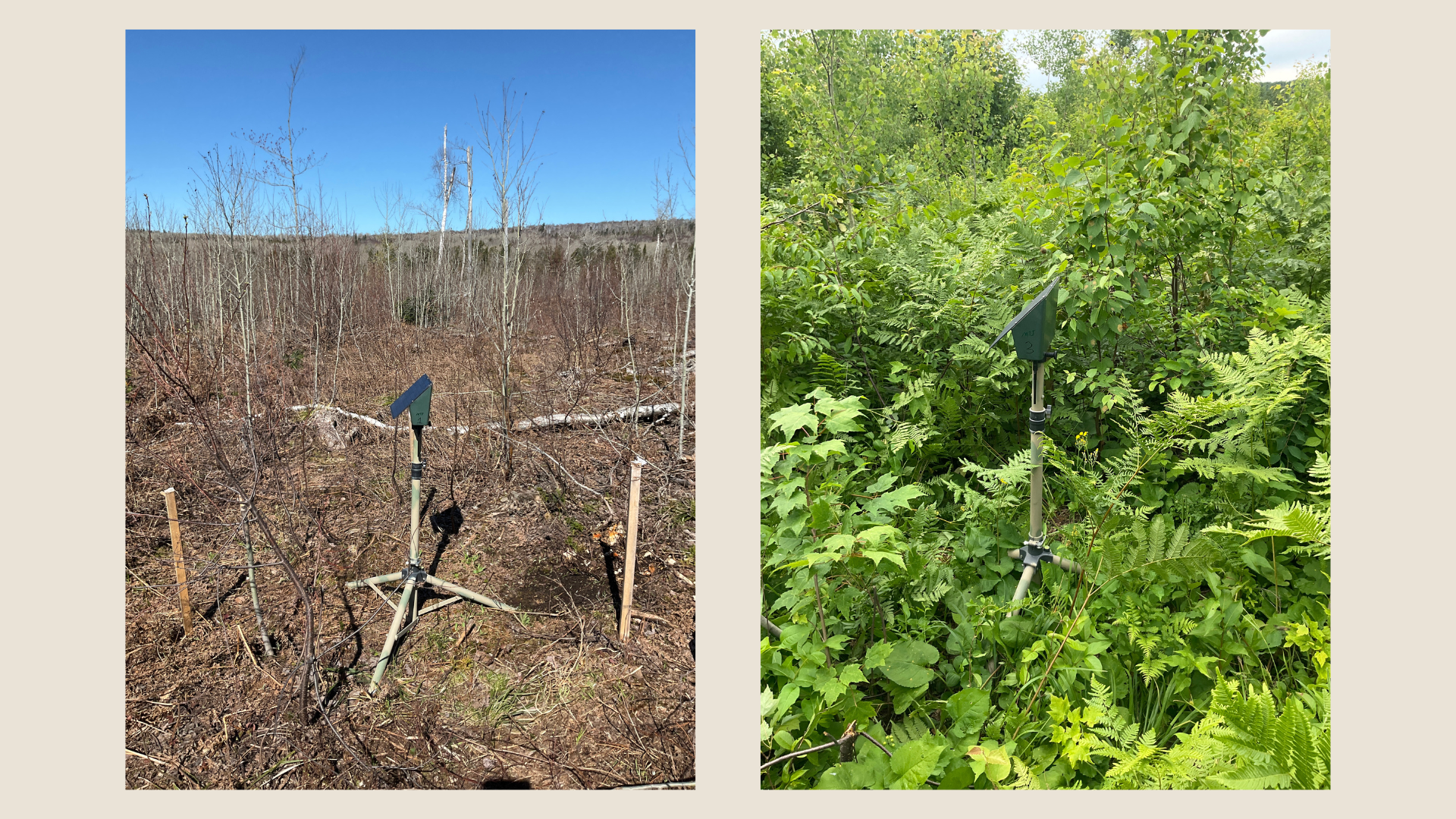
Still, Mikro-Tek wanted to understand biodiversity as a living, changing system, not just a series of isolated snapshots. That is where insect monitoring entered the picture. evolito’s automated insect sensors offered a practical, scientifically grounded way to track ecological change continuously, across thousands of hectares, at a cost that scales with the size of the project.
“To do a biodiversity project, you must be able to monitor biodiversity and quantify it per hectare. The insect monitors are a quicker way of doing it,” Mark says.
Insects reveal patterns forests alone cannot yet show. Their activity reflects microhabitats, seasonal transitions, moisture, and vegetation complexity, giving early, fast insight into ecosystem health long before carbon metrics mature.
Mikro-Tek’s interest in faster biodiversity signals also connects to its role in Verra’s nature credit work. As one of 18 participants in Verra’s biodiversity pilot program, the company is helping test methods that could shape how future nature credits are measured and verified, work that depends on exactly this kind of continuous, quantifiable data.
“We’re one of the Verra pilot projects,” Mark explains. “We’re exploring ways to measure and monetize biodiversity.”
That continuous data is already revealing measurable differences on the ground between areas affected by aerial herbicide spraying. For Wahkohtowin Development, Mikro-Tek’s First Nations partner, the results validate generations of land knowledge:
“The aerial spraying of glyphosate over the forest is causing biodiversity loss at a massive scale in the traditional territory of our owner Nations. At Wahkohtowin, we know what the effects are, and the land users see it daily. However, the Crown (Government), which allows this voluntary spraying carried out by sustainable forest licence holders, continues to look the other way and fails to acknowledge the biodiversity loss.
Working with evolito and deploying these sensors has given us the opportunity to accurately measure and quantify biodiversity differences through insects, and has given us real, verified data comparing sprayed and unsprayed areas. Results from last year’s trial revealed a 13.1% increase in abundance and a 17.6% increase in biomass in unsprayed areas compared to sprayed areas. These results confirm exactly what our owner Nations have been saying — the forests are being sterilized, and biodiversity declines when glyphosate is sprayed,” shares Tristan Flood, Conservation Operations Forester at Wahkohtowin Development.
Insects, Bears, and Forest Lessons
Even curious wildlife got involved. At one restoration site, a bear knocked over a sensor, sniffed it, scratched it, and wandered off.
“One particular bear came back a couple of times and damaged a couple of the sensors,” Mark recalls with amusement. “You could see some teeth marks, but the units are pretty tough.”
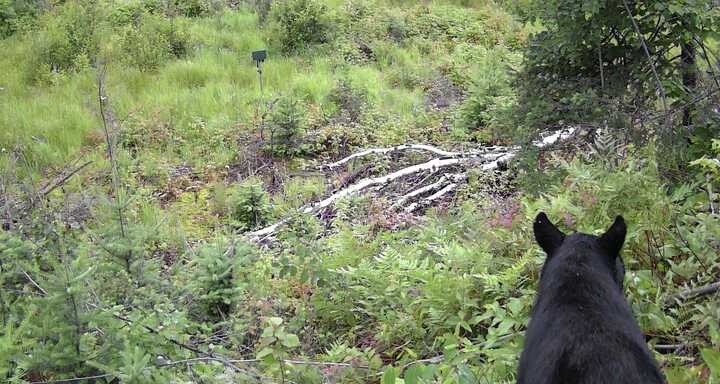
Protective fencing followed, but the moment stuck: in restoration, the forest always has the last word.
It also underscored Mikro-Tek’s core argument for biodiversity data: it moves faster than carbon ever will.
“It’s a long time to monitor carbon, some 60 or 70 years before we’d measure those changes. Biodiversity is quicker. Maybe biodiversity could even help in starting these projects,” says Mark.
By tracking insects alongside vegetation, birds, and soil data, Mikro-Tek can build restoration credibility early, well before carbon models mature enough to prove anything on their own.
The Future of Carbon and Nature Credits
As carbon markets mature and nature markets take shape, restoration projects need to show clearly how ecosystems are changing over time. Evidence is becoming just as important as ambition.
Mikro-Tek’s combination of mycorrhizal restoration, biodiversity monitoring, First Nations partnerships, and new technology offers a practical model: ecologically grounded and scientifically verifiable.
“A lot of the time, carbon and biodiversity are tied together. This is a really good time to bring them together,” Kean reflects.
Their work shows that restoration isn’t only about planting trees. It is about understanding how entire ecosystems recover and proving it with data that holds up. The tools and partnerships now available make that possible in ways that weren’t achievable before.
The way we restore forests and the way we monitor them are changing quickly. Mikro-Tek’s work in the boreal offers a glimpse of what comes next: science-led, community-informed, and grounded in continuous data that shows ecological change as it happens.

.jpg)